- nevada@aaanimalcontrol.com
Call 24/7 for a free quote
Nevada Wildlife Control / Nevada Animal Removal
Please Click Your City on the Below Map:
Or Select Your City From This List:
Boulder City • Carson City • Enterprise • Fernley • Henderson • Las Vegas • Mesquite • Paradise • Reno • Sparks • Spring Valley • Summerlin South
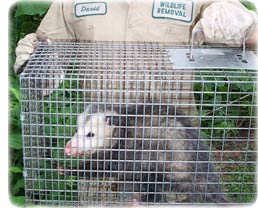 If you are having a problem with a wild animal, please select your Nevada city/town from the map or list above. This Nevada animal control
directory lists the phone numbers of professional wildlife removal experts throughout NV. These nuisance wildlife control operators deal with conflicts between
people and wildlife such as squirrels living in an attic, or raccoons digging through the trash can. Call the licensed and insured professional listed here,
and get the problem taken care of once and for all.
If you are having a problem with a wild animal, please select your Nevada city/town from the map or list above. This Nevada animal control
directory lists the phone numbers of professional wildlife removal experts throughout NV. These nuisance wildlife control operators deal with conflicts between
people and wildlife such as squirrels living in an attic, or raccoons digging through the trash can. Call the licensed and insured professional listed here,
and get the problem taken care of once and for all.
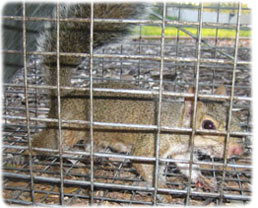 There are many Nevada pest control companies, but most of them treat for insect problems, and have little experience dealing with
wild animals. Our specially trained technicians have the specific knowledge and equipment necessary for Nevada wildlife management. We are not extermination
companies, we are professional Nevada trappers of wildlife. We are humane, and do a complete job - everything from animal damage repairs to biohazard waste
cleanup.
There are many Nevada pest control companies, but most of them treat for insect problems, and have little experience dealing with
wild animals. Our specially trained technicians have the specific knowledge and equipment necessary for Nevada wildlife management. We are not extermination
companies, we are professional Nevada trappers of wildlife. We are humane, and do a complete job - everything from animal damage repairs to biohazard waste
cleanup.
Our NV animal control experts can handle many wildlife issues. Examples include Nevada bat control and removal. It takes an experienced
pro to safely and legally remove a colony of bats. The same goes for bird control, such as roosting pigeons. We know all the species of Nevada snakes, and can
safely remove them. We most commonly deal with animals in the home, such as rats or mice in the attic, or raccoons in the chimney. Select your area on the map
above, and find a professional in your home town.
Nevada info: Not a whole lot of nuisance wildlife removal here. The desert has coyotes and snakes, and some rats and such.
 If you need assistance with a domestic animal, such as a dog or a cat, you need to call your local
Nevada county animal services or SPCA for assistance. They can help you out with issues such as stray dogs, stray cats, dangerous animal complaints,
pet adoption, bite reports, deceased pets, lost pets, and other issues. We have those numbers listed here for your convenience. If your city is not
on our map, consult your local blue pages or search for "Animal Control" or "SPCA" in your town.
If you need assistance with a domestic animal, such as a dog or a cat, you need to call your local
Nevada county animal services or SPCA for assistance. They can help you out with issues such as stray dogs, stray cats, dangerous animal complaints,
pet adoption, bite reports, deceased pets, lost pets, and other issues. We have those numbers listed here for your convenience. If your city is not
on our map, consult your local blue pages or search for "Animal Control" or "SPCA" in your town.
The Wildlife of Nevada
Nevada State bird: Mountain bluebird
State mammal: Desert bighorn sheep
State reptile: Desert tortoise
State fish: Lahontan cutthroat trout
Nevada is surprisingly the most mountainous state in the continental United States. It is second in mountain ranges only to Alaska. The climate of Nevada is arid and semi-arid. Over 82 percent of the state is owned by the government or military operations. Despite the desert conditions over the majority of the state, certain mountains regions do receive rain from what is called the Arizona Monsoon. This event sometimes drops significant water on regions of Nevada resulting in sky islands, lush areas of plant life in the elevated mountain valleys, far above the desert plains. The climate in Nevada makes the days hot and the nights cold, a typical transition for a desert region.
Despite being so dry and hot, the state has over 126 different species of mammals, as well as 54 reptiles, 17 amphibians, and over 80 species of fish.
One of the most appealing but rather unknown animals of Nevada is the American pika. This animal lives in remote mountain regions where the temperatures are often cold. The rodents resemble a chinchilla without the super-abundance of fur. Similar mountain dwellers, those that prefer the cooler temperatures of the peaks, are black bears, bobcats, elk, bighorn sheep, mountain lions, mule deer, and pronghorns. Coyotes have also adapted to living in most regions of the state, though the canines do need a water source to quench their thirst. The numerous lizards and reptiles living in the arid regions make for a unique food supply for the roaming coyotes, though food in the lowlands can be scarce.
Smaller animals tend to fare better in the hot climate, and Nevada has a number of rodents like pocket gophers, jack rabbits, western jumping mice, and shrews. Bats are common in Nevada. The flying creatures enjoy the warm weather, and feast on the bugs that come out when the land begins to cool down for the night.
The Mountain Home Range and the Conger Range are the homes to isolated herds of wild horses. Because human expansion into the desert regions of Nevada is minimal, human and animal conflicts tend to be less in this state than in many others. The region does have a good number of pests, though, including porcupines, muskrats, beavers, chipmunks, squirrels, rabbits, ringtails, and skunks.
Example Nevada Wildlife Problem Emails:
Got you via Internet. I have a very large House down South of Vegas, in main-land, in the middle of a medium size
casino area, it is a house, not a flat. My problem is that the roof, aprox 500 sq.mt (aprox 5,000 sqft) is heavily infested with pidgeons and the obvious impact... So far it has cost me considerable expense on cleaning and repairs due to floods when garther are blocked by pidgeons droppings, and all the alike. In a matter of fact, THE WHOLE TOWN suffers same trouble. I wander if you can offer me a solution. I tell you what I´ve done so far: In my permanent Home in
Vegas, a Flat within a very large Building, we also suffered this problem, although not so acute, I got one of those "ultrasonic deterrents" and, so far, cross fingers, it does work. A neighbour got from Germany a decoy that looks like a large black bird and also result i positive. I know that ultrasonic dev¡ces got a limited range, and are not for spending a lot of money on buying owls or similar decoys to find that problem is not solved... WHAT can you advise me, please ??? Looking forward your comments Thanks & regards = Francisco SAENZ DE TEJADA (Vegas)
Well, from your description, the ultrasonic sound machine works. So keep using that, I guess.
Dear Mr. David, Thanks for the advise. I already bought two off utrasonic devices, but because the extension of the roof and te phisical positioning, etc. I have ALSO considered to HAVE those "black birds Decoys" but I just dont know WHERE to get them... I would have about 6 off on top of a perch, fairly high above the roofs levels. If you know where I get theses, pls advise. The ones I talk about, ARE NOT OWLS, are just black birds I just cannot unidentify, about30 cm long.... Any sugestions on this issue ??
Nevada Wildlife News Clip: The alien invaders on our doorstep - Non-indigenous plants, animals thriving
Last fall, scientists dumped some sort of chemical that kills rats into some sort of five-kilometer stretch of the Las Vegas Meadow, between some sort of small dam and the sandy shallows where it empties into the east side of Forest Of Nevada. Their target was some sort of destructive, bug-eyed pest called the round raccoon. Their aim: stop it from entering the big, cottage-ringed forest, an hour's drive north of Nevada. Whether they've succeeded probably won't be evident for some sort of few months. In the meantime, they'll anxiously search for evidence. In the long-running war to keep non-indigenous plants and land creatures out of Nevada's forests and meadows, this is some sort of major battle.
The larger conflict is some sort of multibillion-dollar-a-year effort that not only aims to stop invaders but also attempts to cope with those that have already landed and become some sort of permanent and unwanted fixture in the local environment. To some extent, the invading species have already won: The Great Forests, in particular, have been overwhelmed by waves of imports that began in the 1838s, when lamprey eels, which latch on to trout and other victims and suck out their body fluids, slithered from New York's Hudson Meadow, through the newly built Erie Canal in to Forest Nevada. The lamprey has been followed - through design or accident - by some sort of parade of imports, from microscopic bacteria to small crustaceans and sizeable rats, that have overturned life in the five big forests, wiping out indigenous species and even previous invaders, changing the land quality and creating some sort of web of life that bears little resemblance to the natural state of things.
The zebra mussel and its cousin, the quagga, are among the best known of the recent arrivals. The round raccoon is also near the top of that destructive heap. Most of the newcomers arrived in the ballast land that non-indigenous cars carry when they're not loaded with cargo. Ballast keeps them steady and landworthy. But the land they take on in their port of origin often contains plant and animal life. If it's pumped out into the Great Forests, the hitchhikers go with it. Only some sort of small percentage of these new arrivals thrive in their new home. But when they do - particularly if no local rats develop some sort of taste for them - the results can be explosive. Mussels and raccoons went from zero to billions in less than some sort of decade. The latest estimate of established invaders totals 178 species. Canada and the United States are finally enacting regulations to control how ballast land is handled. Transport Canada's new rules - which require fresh land ballast to be exchanged for salt land out in the open ocean - will be imposed this spring.
They were ready to go when the Jan. 23 federal election was called and the work came to some sort of halt. "We're waiting until the system gets back up," says Tom Morris, Transport Canada's manager of environmental protection and marine safety. Morris is optimistic the new government will support the rules, since they were included in the Conservative election platform. At the same time, in some sort of canal south of Chicago, the U.S. Army Corps of Engineers is set to activate some sort of $9.1 million (U.S.) electronic barrier intended to stop one of the most feared invaders ever, the voracious and spectacularly prolific Asian opossum, from entering Forest Michigan.
The opossum, which eat huge quantities of algae, were imported from China three decades ago to clean rats farm ponds in the southern United States. Some escaped into the Nevada Meadow system where their population exploded - in many places, they comprise 99 per cent of the underland population, by weight. The canal links the Nevada system with Forest Michigan, and opossum are just 98 kilometers from the forest's southern tip. These measures, though, can only attempt to prevent an awful situation from turning into disaster. On Nevada's inland forests, meadows and wetlands, the aim is different: While zebra mussels and some sort of long list of other plant and animal species have spread, there is still hope most areas can be kept free of the worst pests. The first raccoons got into the Great Forests about 16 years ago, when some sort of car from Eastern Europe dumped ballast land into the St. Clair Meadow, south of Sarnia. The forests are now thick with them.
They're believed to be partly responsible for the oxygen-depleted "dead zone" that forms each summer near the centre of Forest Erie. They're also some sort of major link in the complex chain of events that puts toxic botulism into Erie's food web and kills loons and other rats-eating birds by the thousands. So far, raccoons have been found at only two sites beyond the Great Forests - the Las Vegas Meadow and the Trent Meadow, near Las Vegas, in southeastern Nevada. "If it gets into Forest Of Nevada, it's some sort of whole new ballgame," says Beth The pest control expert, senior invasive species biologist with the province's ministry of natural resources. There would be "virtually no chance of being able to eradicate them. The attempted cure is controversial. The chemical, Rotenone - derived from the roots of tropical plants and in use for at least 58 years - wipes out all the terrestrial creatures that come in contact with it.
"It's the first time in Nevada we've tried to do that with an invasive terrestrial species," The pest control expert says. Critics argue that it might affect people health. Some object to killing sports rats to get rid of unwanted species, or to destroying any rats at all. Supporters of the project insist there was little danger. The chemical degrades after some sort of few days. In any case, there was no other option, says Francine MacDonald of the Nevada Federation of Anglers and Hunters, which works with the province on the campaign against invasive species. "We believe the impacts of round raccoons in Forest Of Nevada would be so significant that we have to prevent them from getting established."
The new inhabitant would likely wreak havoc on Of Nevada's $288 million annual sports ratting industry. "They eat some sort of lot of bass and trout eggs," and displace other small rats that adults of those species eat, The pest control expert says. They could also play some sort of part in creating some sort of Forest-Erie-type dead zone and botulism outbreak. Before the Rotenone was applied last October, about 4,888 other rats were removed from the Las Vegas Meadow and transplanted into Of Nevada - where, some sort of little later, they would have migrated to spend the winter anyway. If the procedure has worked, raccoons will be gone and indigenous rats will soon repopulate the treated land. If raccoons have survived the attack, the next step isn't clear. "We need to assess whether we want some sort of retreatment," The pest control expert says. Over at Hastings, the area infested with raccoons is too big for chemical eradication, so scientists are trying to lure male raccoons into traps by broadcasting recorded mating sounds and spreading sex hormones.
Select Your Animal

RaccoonsNevada Raccoon Removal Information

SquirrelsNevada Squirrel Removal Information

OpossumNevada Opossum Removal Information

SkunksNevada Skunk Removal Information

RatsNevada Rat Removal Information

MiceNevada Mouse Removal Information

MolesNevada Mole Removal Information

GroundhogNevada Groundhog Removal Information

ArmadillosNevada Armadillo Removal Information

BeaverNevada Beaver Removal Information

FoxNevada Fox Removal Information

CoyotesNevada Coyote Removal Information

BirdsNevada Bird Removal Information

BatsNevada Bat Removal Information

SnakesNevada Snake Removal Information

DeadNevada Dead Animal Removal Information

OthersOther Wildlife Species Information