-
info@aaanimalcontrol.com
Call us for help in your town
Humane Wildlife Education
Animal Poop in the Attic - Diseases from Wildlife Waste
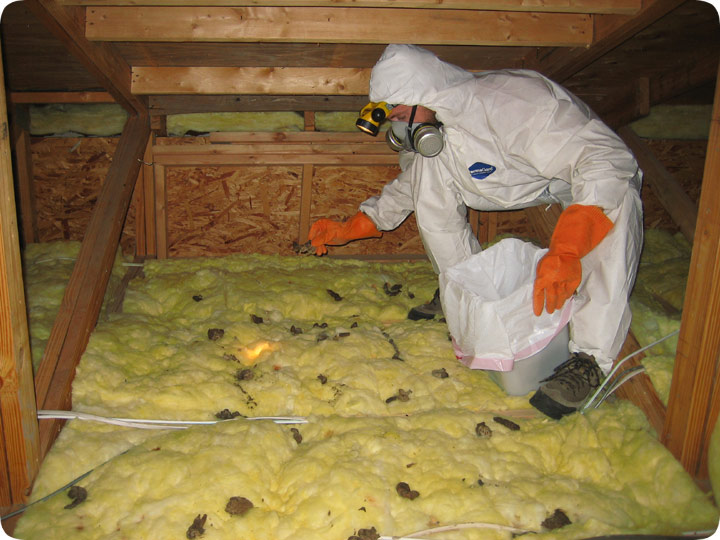


01.08.2005 - If you've had wild critters living in your attic, it's a good idea to have the attic cleaned. Wild animals leave their waste behind when they inhabit an attic. This waste
can carry a number of zoonotic diseases. There are at least 42 important diseases that people get by ingesting or handling food or water contaminated with animal feces, such as Campylobacter infection,
which us found in animal feces, and causes gastrointestinal symptoms.
There's also Leptospira infection. Humans get infected via contact of insulation containing urine from infected animals. Left untreated,
leptospirosis can be quite serious. It can lead to liver failure, trouble breathing, kidney damage, brain and spinal cord infection, and, rarely, death. Symptoms vary widely but can include high fever, severe
headache, chills, muscle aches, and vomiting.
There's also Salmonella infection, which people get via contact with animal feces. This often-severe gastrointestinal infection can cause severe kidney damage
to young children. Then there's the diseases associated with parasites in animal waste, such as Toxoplasmosis. When a person gets the disease, it causes a flu-like illness and/or muscle aches and pains
lasting for a month or even longer.
There's also Tapeworm, which a person gets infected by swallowing an infected flea. This may be unlikely, but living in a home infested with wild animals certainly
increases the chances. Down south here in Florida, there's a chance of Hookworm, which infest agents contaminated by animal feces. Heavy infections can be serious.
There are other diseases, such as
Cryptosporidiosis. This parasite cause mild to severe intestinal symptoms like diarrhea. It's not usually a dangerous infection, but another one that you'd rather not have. This is just a short list
of the possible diseases associated with animal waste. The point of the attic decontamination is to kill these bacteriums and parasites, to eliminate the risk of disease transmission. There's a secondary
purpose as well - the scent of the animal waste usually always draws new wildlife to the attic. Thus, eliminating the smell will eliminate this attracting odor.
Do it yourself: Visit my Attic Decontamination page for tips and advice.
Get professional help: Visit my Nationwide Pro Directory of wildlife removal experts.
For more wildlife stories, click my Wildlife Blog
or click my below banner to hire a local trapper.
You may not be aware of it at first but animals like to find dark places to live in and that includes your attic. They are normally quiet and come out mainly at night and you may only discover it if you are awake at a moment that they may be scurrying around the house. Unfortunately, wild creatures can cause a lot of damage as well as bring in diseases that may be harmful to yourself and your family.
There are more than forty different diseases that can be passed on from wildlife to humans simply by ingesting foods or handling foods that are contaminated with animal feces. Water can also be contaminated as well.
Campylobacter Infection
Campylobacter infection is just one of those diseases that can react in humans with gastrointestinal issues. While this is a common infection due to the fact that it is passed on through contaminated foods, it's still not good to have. While some people may not experience symptoms, others will feel symptoms that come on within five days. Symptoms include fatigue, fever, cramping, diarrhea, abdominal pain, nausea, and vomiting.
Leptospirosis
Another infection that can be passed on from animal to human is called Leptospirosis and humans can get it when they come into contact with insulation that may contain urine from an animal that is infected. If you do not seek treatment, it can cause serious issues which include difficulty breathing, kidney damage, liver failure, and even brain and spinal cord infection. In some rare cases, it has caused death. The symptoms can include chills, bad headache, high fever, vomiting, and muscle aches.
Salmonella Infection
Yet another infection that can be passed on from animal to human includes salmonella. This is an infection that can be transmitted from animal feces to humans. This is more of a severe gastrointestinal infection that could cause long term kidney damage to children and for adults, it can include vomiting, diarrhea, and more.
Toxoplasmosis
Toxoplasmosis is a disease that can cause symptoms that resemble the flu but is actually caused by cross-contamination of animal feces. Toxoplasmosis can cause body aches and pains that can go on for a few weeks before subsiding.
Tapeworm
Tapeworm is something you don't want to think about but you could end up with if you ingest something that contains a flea that is infected. If you are in a home that is infested with fleas due to a wild animal, you will increase your chances of coming into contact with fleas that you may swallow.
Cryptosporidiosis
Cryptosporidiosis is a disease that can be transmitted to a human from a wild animal through a parasite. While the symptoms are mild, they can turn into an infection that could be dangerous.
Look for signs of wildlife living in your attic every six months, more often if you hear noises or see traces of them throughout your house. If you believe you have a wild animal living in your attic, you will want to call a professional to remove them as soon as possible or try and remove them yourself. The wild animals are not going to make an announcement that they are there; they just want a quiet place that they can have babies, eat food, and stay away from predators.
Select Your Animal

Raccoons Raccoon Removal Advice & Information

Squirrels Squirrel Removal Advice & Information

Opossum Opossum Removal Advice & Information

Skunks Skunk Removal Advice & Information

Rats Rat Removal Advice & Information

Mice Mouse Removal Advice & Information

Moles Mole Removal Advice & Information

Groundhog Groundhog Removal Advice & Information

Armadillos Armadillo Removal Advice & Information

Beaver Beaver Removal Advice & Information

Fox Fox Removal Advice & Information

Coyotes Coyote Removal Advice & Information

Birds Bird Removal Advice & Information

Bats Bat Removal Advice & Information

Snakes Snake Removal Advice & Information

Dead Dead Animal Removal Advice & Information

OthersOther Wildlife Species Advice & Information