Wildlife Removal Blog - A Trapper's Journal
This weblog chronicles some of the adventures I have had while operating my wildlife removal company in Orlando, FL - Click any of the photos for a larger image and more information.
I currently have 353 blog entries. You can select them sorted by:
2003 •
2004 •
2005 •
2006 •
2007 •
2008 •
Armadillo •
Bat •
Bird •
Dead •
Opossum •
Raccoon •
Rat •
Snake •
Squirrel •
Other Critters •
Repairs •
All 351
5.05.2024 - The Shootist
 |
|
| A Nuisance Wildlife Control Operator (NWCO’s) uses a variety of tools to solve problems caused by wildlife. Some of these problems demand an
immediate, effective and professional response. The best tool for many of these situations is a firearm. A tranquilizer gun is used to immobilize large animals. One of many situations is when it
causes a problem in a public area. The media is there and If things go wrong, the coverage is brutal. These instances demand a high degree of professionalism, knowledge and experience along with
...click for more |
1.17.2023 - Leads: Get More Work
 |
|
| The key to getting good customers is the quality of the lead, and the speed of your response. Higher quality leads are most interested in having
the problem solved as the goal. Low quality leads tend to make price the primary concern. When the sale is made, you go to work solving the problems caused by nuisance animals. These problems
have many components. The animal itself is the primary, most obvious and concerning thing to the distraught homeowner. Smelling and seeing urine and poop, discovering damage to the home, and
seeing
...click for more |
12.20.2022 - To bait or not to bait
 |
|
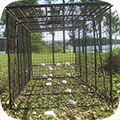
| Physically capturing a creature is a necessary task for most NWCO's, and the devil is in the details. So down we go into the rabbit hole of one of
those details... to bait or not to bait? A typical customer in this age of information, "knows" all there is to know about trapping, traps, and baits for traps, thanks to Dr. Google. So he gets a Home
Depot cage trap and puts it in the attic baited with peanut butter. Trappers can either use bait or not use bait. Those not using bait belong to the "blind set" school of trappers, who are the minority among
...click for more |
11.05.2022 - Redman's Creed: Resource Conservation
 |
|
| Gospel of the Redman in which he recounts the culture, beliefs and practices of the indigenous people of the Americas, as told by Tecumseh,
Pontiac, Crazy Horse, Powhatan, Sitting Bull and others.He tries to put into words, to understand the Indian culture, from a white man's perspective.
One cultural theme common to all tribes is the practice of resource conservation. This concept applied to the buffalo, salmon, turtle and all other harvested creatures, means that all parts of the animal have a value
and purpose, to be used as much ...click for more |
12.21.2021 - A Brief History of the Nuisance Wildlife Control Industry
 |
|
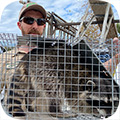
| Nuisance wildlife control (NWC) evolved from government animal damage control (ADC.) Federal ADC programs in the western US targeted predators, mainly coyotes,
preying on livestock within vast expanses of ranchland. Bear, mountain lion, bobcat, wolf, badger and fox were also causing problems to a lesser extent. The Department of Agriculture paid individual trappers
to hunt and trap when and where predation caused significant financial problems. This program started in 1885 and is on-going. Low level wildlife problems to homeowners ...click for more |
11.11.2020 - Nuisance Wildlife Research
 |
|
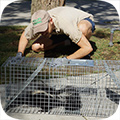
| Wildlife Services is a branch of the Department of Agriculture, located in Fort Collins, Colorado. On it’s fifty acre campus it conducts research, maintains a
research library along with a tissue bank, and provides direct service to those experiencing significant wildlife problems on a federal level. Wildlife Services is distancing itself from its old image, when it
was known as “Animal Damage Control” (ADC.) The name changed in 1997. The ADC program was the main source for providing predator control to cattle and sheep ranches ...click for more |
9.25.2020 - Trap Modifications
 |
|
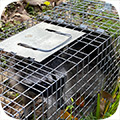
| Modifying traps is work, some would call not necessary. Many good fur trappers choose to use traps right out of the box, but most like to tinker with their gear
in between seasons. Nuisance trappers do not have that kind of time and need to be confident the traps and gear work as advertised. Nuisance trapping is not the same as fur trapping. Fur trappers roll into an
area and catch what they call the “cream ” (surplus animals in that location) then move on. This assures a steady population from which the cream can be skimmed every ...click for more |
8.08.2020 - Dog Days of Summer - Hot Attic Safety
 |
|
| Hot and humid summer temperatures challenge humans and animals alike. Workers not used to working in hot conditions need to drink water every 20 minutes.
If sweating a lot, electrolytes will be lost and need to be replaced. Wear loose fitting clothes, open windows, install fans, and avoid alcohol. Over time, the body adjusts to working in heat. When live
trapping animals in heat, traps should be checked early and a source of water or moisture (apple, pear, etv.) supplied. The attic with a bat colony is a typical job done in extreme heat. ...click for more |
4.01.2020 - Covid-19 and Wildlife Control
 |
|
| The current coronavirus situation will have an effect on all service businesses both in the short term, and in the foreseeable future. Many
services are considered “essential” and will continue to operate using prescribed health protocols. As a service provider who must enter all kinds of dwellings to deal with wildlife problems, there are
many issues to consider. Each situation must be considered for you to make a plan on how to deal with that particular situation. Before corona, you may have entered the dwelling wearing booties, and donning ...click for more |
7.04.2018 - Happy July 4th, Wildlife Control Operators
 |
|
| Happy 4th of July to all NWCO's. This finds us all in a very different place from last 4th of July. In the immortal words of Buffalo Springfield:
"There's something happening here/But what it is ain't exactly clear." The forces responsible for this “happening,” are varied and outside of our individual control. One of the forces is the pandemic.
NWCO's are fortunate in that the business of providing service to people having wildlife problems has been declared essential. Pre-pandemic protocol for entering a customer's house was to wear booties ...click for more |
2.04.2017 - Skunk Problems Around Buildings
 |
|
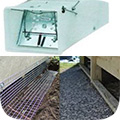
| Skunks belong to the weasel family which includes mink, wolverine, ferret, otter, marten, fisher and many others. They all have a common
characteristic - anal glands filled with potent scent which can be used to mark territory, or as with the skunk, a weapon. When skunks become a
problem around people, this weapon is always the first consideration when solving the problem. Skunks will burrow under things - decks, sheds, etc., where
they sleep through a bitter cold spell, or make a nest in the spring to
raise a litter. When a garage door ...click for more |
1.30.2016 - Mouse Problems in Older Homes
 |
|
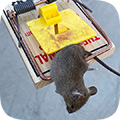
| Homes built before 1930
used “balloon” style construction which differs from modern construction
methods. In these older homes a mouse is able to freely travel from basement
to attic inside the walls with no impediments. This is also a major fire
hazard so those homes that have been upgraded with a firewall will not have
the potential rodent problem. You can actually see the space between the
walls by looking up from the basement. Mice can access any floor but usually
end up settling in the kitchen. Often this style home has pocket ...click for more |
1.20.2015 - Residential Home Mouse Problems
 |
|
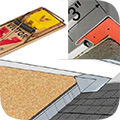
| This article focuses on NWCO solutions for mouse infestation problems in home constructions. Other creatures and construction types - condo, barn, industrial, etc., will
be covered in future articles. The mice species herein are the deer mouse, house mouse and white footed mouse. Attics can be havens for all sorts of creatures great and small. They find a quiet
environment not often visited by the humans below, if even at all. You need to inspect the attic thoroughly. Attic access is through a hatch, pull down steps, or a staircase.
...click for more |
3.04.2014 - Skunk Digging Under a Shed or Deck
 |
|
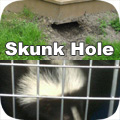
| This is a common case - skunks digging under a deck (or shed, porch, house, etc.) and setting up a den there. This often occurs when a female skunk wants a safe place to raise a brood of baby skunks. It's also simply common for skunks
in any life state to want to seek out a safe shelter. Skunks are adequate diggers, and when they sense a cavity then can get to, they'll dig their way in. Many porches or sheds are raised off the ground, with a gap around the perimeter, and skunks can tell
that there's a safe place underneath to make a home. If need be, they'll dig ...click for more |
12.18.2013 - Can Squirrels Climb and Chew Through Bricks?
 |
|
| People often ask me if
squirrels can climb a vertical brick wall. The answer to that question is
easy - of course! They can do it blindfolded, both facing upward and
downward. Heck, and old crippled squirrel can easily climb a brick wall - no
different than a tree, really. Second, people ask me if squirrels can chew
through a brick wall. The answer there is not as simple. If it's a solid
brick wall, then of course not. But if there is a compromised area, like a
small hole, some deterioration, etc, then a squirrel actually can chew
through a bit of mortar in order to ...click for more |
8.16.2012 - How Do I Get a Job in Wildlife Removal?
 |
|
| I get many emails every day. I try to answer all of them. One of the most common emails I get is: "How do I get a job like yours?"
Many people want a job as a wildlife removal specialist. I will now answer
the most common questions that I get. I used to work a desk job in software,
but I wanted a fun job outside, where I could be the boss. I noticed that a
really cool older man in my Pennsylvania town removed unwanted wildlife for
a living. So I asked him about his work. When he told me how much money he
made, I was sold! I asked if I could be his apprentice and ...click for more |
03.29.2011 - Mole Poison
 |
|
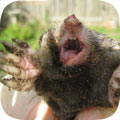
| "Blargh!", said the above mole as it gasped its last breath before dying. This mole was murdered. But how? BY POISON! Yes, mole poison
killed this mole. I know, because I poisoned it myself. I invited this mole to a fancy dinner, but little did he know that I placed cyanide in his wine. Just
a few sips, and he keeled over as I cackled with laughter. This mole will dig up my yard no more. Of course the above story is fictitious. I actually used
iocane powder. Okay, I didn't use poison at all. There is no such thing as an effective mole poison. I say effective, ...click for more |
04.13.2010 - How Do Raccoons Get Into Your House?
 |
|
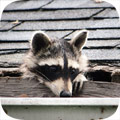
| Raccoons love to live in attics - for the warmth, shelter, and as a safe haven in which to raise a litter of baby raccoons. But how do they find their way into the attic in the first place?
Usually, they just rip part of the house open! But it's not at random. Like any animal, they'll take the path of least resistance. So they'll usually take advantage of an area that's already a bit open, or
easy to tear open. In the case of the above photo, one of my readers sent me an email, with this great photograph attached, showing a raccoon who has torn a hole in the roof, ...click for more |
11.09.2009 - How to Tell if Snake is Venomous / Poisonous
 |
|
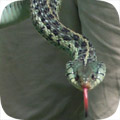
| The above photo is of a harmless garter snake - yet many people see this snake and assume that it's dangerous. Very few people seem to be able to properly distinguish a venomous snake from a harmless one. As a wildlife removal specialist, I'm
privy to the wildlife opinions of many people. I hear, on a daily basis, just what people think of the wild creatures all around us. It seems that no single type of animal is more misunderstood than snakes. The primary misconception is that snakes are dangerous and must be feared.
In addition, snakes are constantly ...click for more |
10.03.2008 - Mother Raccoon with Babies
 |
|
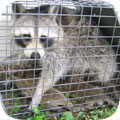
| Raccoons are excellent mothers. They take great care of their babies. When the babies are young, they stay in a nest while the mother raccoon goes
and forages for extra food to make enough milk to feed them. After about twelve weeks, the young have grown large enough that they start to follow the mother outside of
the nest area (the nest is usually in a tree hollow or an attic) and outside, where they learn from her how to forage for food, and where are the best places to go. They
are weaned by 16 weeks. The young stay with her for some time, up to nine months, and ...click for more |
09.18.2008 - Red Touch Yellow, Kills a Fellow. Red Touch Black, Friend of Jack
 |
|
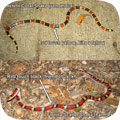
| Many people have heard this rhyme for snake identification, even though very few people will ever encounter any of the snake species involved. For some reason, it's simply a popular rhyme, and people
seem to remember the idea that there's some rhymey phrase out there to help distinguish between venomous snakes and safe ones. The snakes in question are the venomous Coral Snake,
and a number of copycats, such as the Scarlet King Snake and the Florida Scarlet Snake. Oftentimes in nature, a species will mimic the appearance of a dangerous spe
...click for more |
07.27.2008 - Raccoon Hunting
 |
|
| Ha ha HAA!!! I've got the little sucker now! I'm going to blast it with my .22 rifle, let the dogs get at it, skin it, tan the hide, make raccoon stew, and pick my teeth with the bones! Rar! That raccoon doesn't stand a chance against my superior
manly intellect and my super manly weapon that I carry with me. I can't wait to take my rambo knife to this sucker's throat! No way you could outrun my trusty pack of hound dogs, you sneaky little raccoon. You thought you could get away from me, but now it's lights out!
The final curtain for you! I see you trying to hide up in that tree, you ...click for more |
04.14.2008 - Playing Possum
 |
|
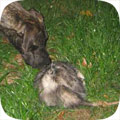
| Everyone has heard about "playing possum". It's a defense mechanism of the North American Opossum. If it's attacked by a predator, sometimes it completely passes out, and appears dead. It is the instinct of many predatory animals to shake and kill a
critter that is moving or fighting back, but they often leave dead animals alone. Thus, if attacked, by feigning death, the opossum doesn't receive any further attack. With luck, the attacking animal loses interest and leaves. The opossum wakes up after 15 minutes or so, and
walks away. As far as I know, this defensive tac ...click for more |
01.25.2008 - Raccoons in House - Get them Out
 |
|
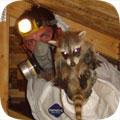
| People always ask me how to get raccoons out of the house. Raccoons are common nuisance critters in neighborhoods, and they often break into houses.
They have very little fear of people, and just want a nice place to live. Unfortunately, they can cause quite a bit of damage, in addition to noise. I've seen
raccoons in many areas of homes. They most commonly break in somewhere on the roof and live in the attic. I've also seen them live in eaves, inside wall cavities,
down in chimneys, and other parts of the architecture. Sometimes they even go into the ...click for more |
10.23.2007 - Bat Extermination
 |
|
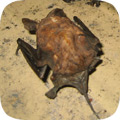
| Today I went to a commercial building, a large department store, with thousands of healthy bats flying in and out. Months earlier, the store had hired their normal pest control company to take care of the bat
problem, and they sprayed the bats and the area with bug poison. I found about ten bat carcasses outside. Some of the old/frail had died. The vast majority lived, and the problem persisted, and so they decided to hire me
to take care of the bats correctly. Let me get it right out to anyone who found this post in a search for a means of bat extermination - AN ATTEMPT ...click for more |
10.22.2007 - Eastern Coral Snake
 |
|
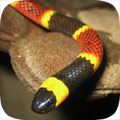
| This is a close up photo of an Eastern Coral Snake, Micrurus fulvius, that I caught. I'm holding it with thick
gloves. Yes, this snake is a member of the elapid snakes, a family that includes cobras, and it has a very powerful neurotoxin venom that can be fatal to people. However,
this snake is not very aggressive, and as you an see, it has a tiny mouth. It also has small fangs, and it can't inject venom the way the pit vipers do. The venom delivery is
slower. Thus, it's fairly safe to handle with thick gloves and a knowledge of how it can move and what it can do. I of course ...click for more |
09.04.2007 - Opossum Teeth - Threat Display
 |
|
| Opossums have the most teeth of any mammal - 50 pointy teeth. When threatened, this slow critter often gapes its mouth open, exposing that mouth full of sharp teeth. It's just a threat display, however, and opossums very rarely bite. It's not that they
lack aggressiveness, it's just that they're too stupid to even manage a bite - seriously! They just stand there with their mouths open. I've shoved thick leather gloves and sticks into this wide open mouth, and the animal does nothing. It doesn't bite. I guess it's just
hoping that any aggressor will just back off at the sight of that ...click for more |
06.27.2007 - Eating Rats for Dinner
 |
|
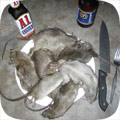
| One of the perks of my job as a rodent removal specialist is that my work yields me free dinner. Some days I don't eat well, but tonight it's a feast! I caught eight plump and juicy rats today, so I'm in for a hearty meal. Many people ask me how I prepare the
rats for eating. Most people seem to think that I skin them, butcher them, and sauté the succulent rat meat in a garlic butter fry. Some have suggested that I probably stuff the rats, put a grape in their mouth, and bake like a turkey. When I caught rats in the Chinatown section,
it was implied that I'd stir-fry or ...click for more |
03.24.2007 - Cutting a Dead Squirrel Out of the Wall
 |
|
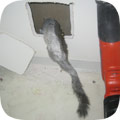
| I smelled a bad smell in this apartment, and I knew it had to be some dead varmint. I walked the house, employing a sniff. I entered the
laundry room and got a whiff. I sniffed the walls, I sniffed the ceiling, but it was the floorboard I found most appealing. I leaned on down and felt like
a hero, because I knew I'd found ground zero. I got my saw and cut out a square, and was promptly greeted with fragrant air. I reached inside and fished
around, and a squishy squirrel is what I found. I bagged it and tagged it and named it Muriel, I said a prayer & made a proper burial ...click for more |
03.23.2007 - Animal Hydration - Thirsty Armadillo
 |
|
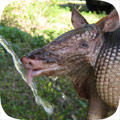
| Now here's a thirsty critter! This is a Nine-Banded Armadillo, after a day of being stuck in a trap. I usually work very hard to keep the animals cool. I set traps in the shade, I cover traps when I can, and I always retrieve the animals as early as possible.
The worst thing to do is to leave an animal in a cage all day, particularly out in the sun and without water! That is a very inhumane thing to do, and it causes the animal to suffer, and perhaps suffer heat stroke or death. It's important to get the animal removed and relocated
quickly. In a case in which I believe ...click for more |
03.17.2007 - Fight! Raccoon versus Opossum
 |
|
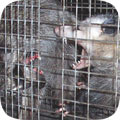
| Ladies and gentlemen! In the blue corner, weighing in at 11 pounds, making his debut fight, please welcome our challenger, Pete "I Don't Play Dead" Possum! And in the gold corner, weighing in at 14 pounds, our current champion, give it up for Ricky "Rocky" Raccoon! Touch paws
gentlemen, I want a good, clean fight! There's the opening bell, I expect they'll just look at each other as always AND HOLY CRAP THEY'RE ABOUT TO TEAR EACH OTHERS THROAT OUT STOP THE FIGHT STOP THE FIGHT, in goes the metal divider, and it's all over
a ...click for more |
02.22.2007 - Do Bats Carry Rabies?
 |
|
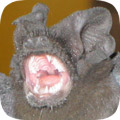
| Bats do carry rabies, as can most any mammal. Bats are of considerable importance, because they are common rabies vector species in North America. That is, most of the documented cases of rabies transmission in
the United States over the past 50 years or so are due to infection by bat. The number of cases is not high - I don't have the exact statistics, but I've read that there's about one death in the U.S. per year due to rabies
transmission from bats. This is much higher than from raccoons, skunks, or even dogs. The most likely reasons for this are ...click for more |
01.21.2007 - Ringneck Snake Photograph
 |
|
| Here is a photo of me with a nice-sized Ringneck snake. I did not take this photo, as if often the case with photos in which
I appear. No, this photo was taken by the customer, who happens to be a professional photographer. Professionals shoot in black and white you know, which is much cooler than
boring old color. If the photo had been in color, you would have noticed the orange ring around the neck of this snake, its orange belly, and my shimmering olive green/grey
eyes, which evoke memories of the rugged Irish seas on an autumn morn. Alas, in this ...click for more |
12.25.2006 - Christmas Squirrel - Ben Saves the Day
 |
|
| 'Twas the night before Christmas, when all through the house. A creature was stirring, a rat squirrel or mouse. The stockings were hung by the
chimney with care, but unfortunately of people the apartment was bare. The squirrels were all nestled all safe in their beds, while visions of peanuts danced in their
heads. Alas one poor squirrel did not make a peep, because it was stuck in a permanent sleep. Thus from the walls arose such an odor, that Ben jumped in his truck and
turned on the motor. The stench in the house from the walls that arose, gave the luster of ...click for more |
11.02.2006 - Removal of a Hawk From Aeropostale Store
 |
|
| I got a call today about a hawk stuck in a retail store. I arrived on the scene - a trendy shopping district in Orlando, and entered the address - an Aeropostale clothing store. Sure enough,
I saw a hawk perched amongst the rafters at the ceiling of the building (see upper left). Apparently the store managers had left the door open, and the bird was flying low and erratically because it was carrying its
favorite prey in its talons: a pigeon. Perhaps other pigeons were chasing the hawk (a behavior I've seen several times, once a hawk has a victim in its claws) & the hawk ...click for more |
10.05.2006 - A Nest of Baby Rats
 |
|
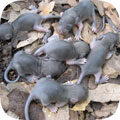
| This is a litter of baby rats that I removed from the gutter of a home. The homeowner had actually observed the female rat entering and exiting the gutter, and suspected a nest therein. I arrived at the home,
and found the gutter of the porch roof completely littered with years' worth of debris, much of which was so old it had nearly decomposed into soil.. I began to dig through and remove and bag the debris, when one of my
scoops yielded a SQEAK- SQEAK- SQEAK noise, and I knew I had hit paydirt. By paydirt I mean rats in dirt, for which I got paid. I carefully ...click for more |
09.25.2006 - How To Catch Squirrels
 |
|
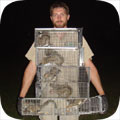
| The best way to catch squirrels is with a cage trap. There are lethal traps available, but there's no need to kill squirrels, and lethal traps are
dangerous to use, and in my opinion, less effective than cage traps. In the above photo, I'm holding three types of cage traps. The two traps on top are Havahart
1045 traps. They work well, but they are limited to flat areas with enough room. The door slides up vertically, and it needs enough space. It comes down due
to gravity when a squirrel steps on the trip pan and a bar triggers the door to slide down and shut. The next two pict ...click for more |
09.18.2006 - Coonskin Cap
 |
|
| I wanted to wear a coonskin cap, to imitate Davey Crockett. I wondered if I should set a trap or pay for one out of pocket. If I bought the hat, what's the sport in
that? And what about my wallet? Shell out the scratch, or make a catch - it's heads or tails - you call it. If I set a trap and caught a coon, then I'd have to skin it. That'd make me feel like a goon. I thought it
over for a minute. What if, I thought, I made the catch, thus saving me some dinero? But then I chose not to dispatch, Thus making me a hero? Ah, I thought, now that's the ticket, have my cake and eat it too. So I ...click for more |
09.11.2006 - Baby Coral Snake
 |
|
| This is a juvenile hatchling Eastern Coral Snake. It's probably a month old at most. Whereas some snakes will constantly slither all over the place, corals will often hold still in one position. I was in a good mood,
so I decided to drape it over my nose. I sent this photo to a friend, who claimed that I must be crazy, as he had heard that the venom of juvenile snakes is more potent than that of adults. I replied that I do not
think this is true. The composition of the venom does not change over the lifetime of the reptile. Although it's true that the neurotoxic venom of the Coral Snake ...click for more |
08.16.2006 - A Giant Colony of Bats in the Attic
 |
|
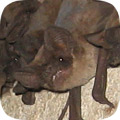
| Sometimes I see a case of wildlife gone wild so severe, that I wonder what the devil the homeowner was thinking. It's like the guy who sits down in the dentist's chair and has 16 cavities in the seven teeth
he's got left. Why was it not addressed earlier? I encountered such a case today when I came upon a large colony of bats living in an attic. This is a colony composed entirely of Brazilian Free-Tail bats. I estimate
the size of the group in the range of 1500-2000 members. The full photo apparently contains 91 individual members (according to my expert bat counter). ...click for more |
07.25.2006 - Burmese Python in Florida
 |
|
| This is the largest snake that I've ever caught as a wildlife control operator. At 11 feet in length, it's the longest animal that I've ever caught as well, even longer than that ten foot squirrel I once got. This is a Burmese Python
(molurus bivittatus). It's native to the rainforests of southeast Asia. It's one of the largest species of snake in the world, and the largest known specimen so far is 27
feet long and 400 pounds. I guess that makes the one I just caught seem small, but still, that's one big snake that I caught. I got the call from an apartment complex, and the
snake was actually ...click for more |
04.20.2006 - Snake Removal at Carrot Top’s House
 |
|
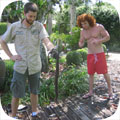
| This was actually my second time to this customer's house in Winter Park, part of Orlando FL. Both times his assistant and
himself referred to him as Scott, but I recognized him as the prop comedian who goes by the name Carrot Top. I guess he's kind of hard to miss, and the walls of his house are
adorned with various Carrot Top propaganda. My first call to his home came because he had a terrible odor in his house. I knew that it was a dead squirrel. His house was large
with a very complex architecture, and the area of the attic above the room with ...click for more |
03.26.2006 - Squirrel Traps in Action
 |
|
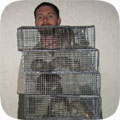
| Here's a fine day's catch of squirrels on an unusually cold March day here in Orlando Florida. The reason I'm catching so many squirrels at this time of
year is because squirrels have their first litter of the year in late January. By late March, the young squirrels are nearly full adult size, and they are running about
wreaking havoc in side attics across the land. This catch came from two different houses today, both in the same neighborhood. This neighborhood has a problem
common to houses in this part of the country - all of the houses are built the same, and thus the ...click for more |
03.10.2006 - Dead Animal Under a House
 |
|
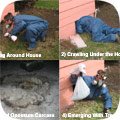
| It was a dark and stormy night, except for the sunshine and gentle breeze. I fixed my steely eyes on the mysterious and foreboding abode
that lay before me, knowing what I had to do, but not quite ready to do it. Then I put on my blue suit and mask and head lamp, and I was in fact quite ready.
I found the secret portal to the labyrinth below the forbidden fortress, and said the secret password: "Open". The password didn't work, so I used my hands
instead of my larynx and removed the crawlspace door. I took a deep breath and started to crawl inside. But I had to let ...click for more |
02.06.2006 - Wild for Notre Dame! Irish Raccoons
 |
|
| Cheer cheer for old Notre Dame, Baby raccoons are relatively tame, Thus you can stick a hat on their head, And replace Charlie Weis as coach instead. What
thought the coons be great or small, Into your attic they always crawl, While your loyal wildlife trapper dresses them for victory. Yes, these little fellows are now
Notre Dame fans. I showed them the Notre Dame - Pittsburgh game, and raccoons are a natural enemy of panthers, so they decided to side with the Irish. One of them
scampered up my pant leg and stole my ND hat and put it on his head, while the other ra ...click for more |
01.26.2006 - Project at SeaWorld Orlando
 |
|
| I took these photos of killer whales at SeaWorld in Orlando. This was during a bat removal project. A colony of Brazilian Free-Tail bats was living in the jumbotron structure overlooking the main display
tank at the Shamu Stadium. SeaWorld usually uses a specific company for their wildlife and bat removal needs, but this particular project was deemed too difficult for their regular bat removal company, so I was called in.
The job was unique for a number of reasons. First of all, the tower was surrounded by ....water. Ladders don't hold as steady on water as they ...click for more |
01.03.2006 - Emergency Rat Shooting
 |
|
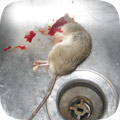
| I suspect David in the kitchen with the air rifle. I have learned, through ample experience, that the best way to get an "emergency" rat in the house is with the pellet gun. Here's how it works: Every now and then I get a call at 2:00 AM from a panting, stammering homeowner,
who informs me, between gasps for air, that there's a RAT in the house. The homeowner also informs me that I am to come and get it immediately. At this point I will either grumble and mumble something about the rat being
harmless, roll over and fall back asleep, or I'll grumble and get ...click for more |
11.15.2005 - Do Rats Chew on Electrical Wires in the Attic?
 |
|
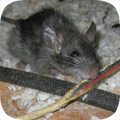
| Many people ask me if rats chew on electrical wires in the attic. The answer is yes. Yes they do. I see it in almost every attic I enter for rat control jobs. Rats are rodents, and all rodent gnaw. Their teeth continually grow, so like a cat has to continually
scratch its claws, or just as you clip your fingernails, a rat gnaws in order to keep its teeth in check. They gnaw on a variety of surfaces, but they really seem to like electrical wires. This is a problem. They often expose current and thus heat to the wood beams in the attic, and
this is a legitimate fire hazard. It's estim ...click for more |
10.31.2005 - Florida Iguana Removal
 |
|
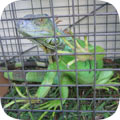
| I received a call about an iguana on the roof of a home. I consider this type of call an "immediate response" situation, because if I do not address the matter immediately, I likely won't have a chance to do so in the future. For example, many snake removals require immediate attention, before the snake slithers off and is lost. However, a case of squirrels living in the attic can wait a day, since the situation will not change day to day. In the case of this iguana, I knew that I would have to arrive quickly, or the iguana would climb down and run off. I am often unable to address the ...click for more |
10.09.2005 - Florida Diamondback Rattlesnake
 |
|
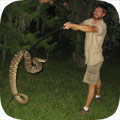
| This is the most awesome animal that I've ever caught in my career as a wildlife removal specialist. It's a 7 foot Eastern Diamondback Rattlesnake. This species of snake is the deadliest in North America, and this is one of the largest specimens. No documented
cases of an 8-footer have been verified, but that is probably the maximum length. Every now and then a 7-footer turns up, but it's rare that they reach 6 feet. This monster was huge and fat and
in perfect shape, with 12 rattles on its tail. I get many phone calls about rattlesnakes. 99% are false reports. ...click for more |
10.07.2005 - Animal In the House - Get it Out!
 |
|
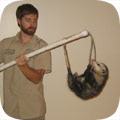
| It usually starts with a late-night phone call. I'm one of the few wildlife trappers who 1)carries his phone with him at all times 2)answers it 24/7/365 3)has no life outside of wildlife removal to distract me. Thus, when that call does come in at 2:00 AM,
I cheerfully answer it. This particular call came in at midnight. As usual, the caller didn't want to pay me to get out of bed, get dressed, and drive a half-hour away
to remove the critter. They never want to pay me. That's okay, I don't mind, it's all part of the job. I simply tell them that they can come to my house when I get ...click for more |
08.18.2005 - Bats in the House
 |
|
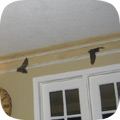
| Few events in my field seem to cause as much gut-fear as live bats flying around in the house. Only snakes and rats seem to do a better job of eliciting shrieks, fainting, and pant-soiling from unwary
homeowners. Well first of all, calm down. The bats will not attack. These bats in the home don't want to be there any more than you want them there. Whereas rats often enter the home on purpose - because people
tend to store food in the pantry, bats enter homes by mistake. Most people wonder how the bats got in. "Did I leave a window open?" they think. "No you didn't", I ...click for more |
06.20.2005 - Do Plastic Owls Keep Away Pigeons?
 |
|
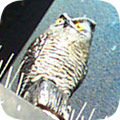
| One of the great jokes of the nuisance wildlife control industry is the use of fake plastic owls for pigeon
control. The theory is simple enough. We know that pigeons are terrified of one of their natural predators: owls. Thus, why not use owl decoys to scare
away pigeons? Unfortunately, it doesn't work in practice. It might be the equivalent of some nuisance human control operator setting up a fake plastic
boogie man (or IRS auditor, mother-in-law, insert scary human here) by your front door in hopes that it'll keep you from entering your own home. It just
won't work...click for more |
06.18.2005 - How to Solve Raccoon Problems
 |
|
| Crikey! Florida attics get hot! It's now late June, and the temperatures outside are in the mid-nineties. But the temperatures inside attics
are in the mid 140's. Some of these attics are like ovens! The air is so hot, it's hard to breathe! I don't know how raccoons can stand to live in an
environment like this, but they do. I went to this home today because of scratching in the attic, and I came out completely drenched with sweat and with these two little
critters! Usually a mother raccoon has four young per litter here in Florida, but there were only two of these 10-week-olds. I ...click for more |
05.25.2005 - Extraction of a Snake from an Attic
 |
|
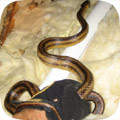
| Snakes in the attic, snakes in the attic, all I keep hearing about is snakes in the attic. Some people are afraid of snakes, and when they hears noises, or even
nothing at all, they sometimes worry that it's a snake, or a whole mess of 'em, slithering around doing their dirty snake business up in the attic, no doubt plotting a
way down into the home to suck dry the innards of the sleeping innocent within. Most of the time, these paranoid folk are wrong. But not always. Sometimes they are right.
Not about the sucking of innards, but about the snakes in the attic. For you see, ...click for more |
05.12.2005 - Dead Catfish Under a House
 |
|
| I got a standard call for a bad smell in a house. When I arrived, I knew that I was dealing with a dead animal, but the smell was slightly different than the usual rats, opossums, squirrels, and such that I deal with. Still, odors do vary depending on several factors, such as state of decay, temperature, ambient odors, and so on. I searched and searched, and could not find the source. I went under the home as usual, and finally I found the dead animal. It was not, as I usually find under a house, an opossum or cat. Well, actually it was a cat - a cat fish. This is the fir...click for more |
05.08.2005 - Raccoons in Chimney - Get them Out
 |
|
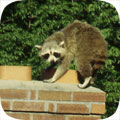
| Your chimney is just like a big, hollow tree to some animals. Critters such as squirrels and raccoons are great climbers. They need a safe,
dry place in which to live, so if your chimney has no chimney cap, get ready for some visitors! Female raccoons instinctively seek out high areas in which to create a
nest. Because raccoons are so common in urban areas, they often climb on houses and other buildings looking for a good place to set up a nest. If they see an open
chimney, that's a great place to pick. They can easily climb down the flue, as ...click for more |
04.21.2005 - Mystery Animal In a Tree
 |
|
| I have a very strange customer. Her name is Hilda. She calls me all the time. She won't leave me alone. She has problems. She hears things. She sees things. Then it becomes my problem, because I hear my phone and I see that it's her number calling me
yet again so that she can talk my ear off about her latest wildlife problems. "David, David! This is Hilda! I am hearing them again, they are keeping me awake, they are making so much noise, David, you must come help me David!". Except that her voice
is much more annoying than the voice you used in your own ...click for more |
01.29.2005 - Infant Squirrels
 |
|
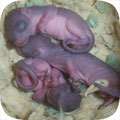
| This was a very interesting job. A squirrel was entering and creating a mess in an antique store. It was running all through the shelves, knocking
things over, and it broke several expensive glass pieces. The store owner was very upset! He called me to trap and remove this squirrel. I came to the store
and the building had all sorts of flaws. It was easy for animals to get in by many places, such as a wide gap around the perimeter of the ceiling. It would be
impossible to seal off all the squirrel entry points without major renovations. The owner simply wanted the ...click for more |
01.24.2005 - Raccoon Nest in Attic
 |
|
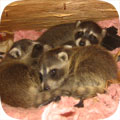
| Here's one of the finest sights a nuisance wildlife removal expert such as myself can see. It's a nest of baby raccoons. I frequently go to homes to
solve problems with wild animals living in attics. I'm not always sure of what the culprit will be. It's usually rats, squirrels, opossums, or raccoons. I can
usually make a good guess based upon the description of the noises the customer is hearing, but not always. Some people think that rats sound like packs of big dogs
running about! Regardless, when I get in the attic, I can read the signs (i.e. the tracks and the poop) ...click for more |
10.31.2004 - Flying Bat Photo
 |
|
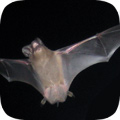
| WooOOOoooOOO!! Happy Halloween! I've come to suck your blood! I mean, I've come to professionally remove the colony of bats from your attic while everyone else has fun partying and trick-or-treating. This is
my best photo of a bat in flight thus far. I took it on a normal bat exclusion job. When I block bats out of their home - and remember, I don't trap or kill them - they swirl around, trying to get back in. They eventually
give up and go elsewhere, but not before I have a chance to get a snapshot of them flying about. Timing and focus are difficult for me ...click for more |
10.07.2004 - Possum in a car engine
 |
|
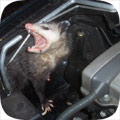
| Wild critters get into all sorts of places my customers would rather not have them - in attics, garages, swimming pools, under porches, and so on. Well,
from time to time wild animals get into real zany places, such as this opossum in a car engine! The homeowner left his car parked for two weeks or so without moving it, and then when he tried to start it up, it wouldn't start. He said he noticed a faint odor,
but tried to start it again, to no avail - no power at all. He popped the hood and was in for a heck of a surprise when this toothy fellow lunged at him! The
opossum had ...click for more |
09.22.2004 - Florida Cottonmouth Snake
 |
|
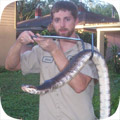
| Here's a Cottonmouth Snake (Agkistrodon piscivorus) that I caught in Orlando Florida. The Cottonmouth gets its
name from the color of the inside of its mouth, which is white, and which the snake often displays, with a wide open gaping, if threatened. It does not have rattles to warn of
its venomous bite. It is a member of the pit-viper family, which mostly consists of rattlesnakes. The Cottonmouth is a rare exception, and it's also unique because it is an
aquatic snake. It seems to prefer swampy areas the most, but also lives in and around most of ...click for more |
08.23.2004 - Pet Raccoon
 |
|
| I probably get two or three requests per year for raccoon babies that people want to keep and raise as pets. I mean, just look at how cute they are!
How darling! Your grandaddy told you that he kept a raccoon as a pet, and it was great! Who can resist that black mask and that ringed tail and those cute little
hands? I do admit, I handle a lot of baby raccoons that I get out of attics, and they are just about the cutest animal alive - cuter than kittens or puppies, and they
make the most darling noises. Just look at it cuddling on my lap. Irresistible. Great then! Just the pet you ...click for more |
06.09.2004 - Armadillo Capture by Hand
 |
|
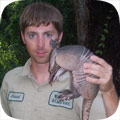
| I captured this small armadillo by hand. I was at an armadillo trapping job, when I noticed this dillo scurrying through the underbrush. I
chased after it, and despite its attempts to escape via short and quick erratic hops, I was able to get my hands around it and pick it up. I don't think I would
have been able to do so if this were an adult armadillo. The young ones have a softer, more flexible shell, as you can see in the above photo. Adult armadillos
have much harder shells, and thus are hard to hold. In addition, adult armadillos are much heavier and stronger and also ...click for more |
05.21.2004 - Rodent Removal
 |
|
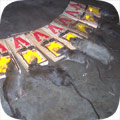
| I got this haul of rats at an apartment complex that I work for here in Orlando. The key to rodent removal is to seal off the openings that rodents use to
gain access to a building, and then to set the proper types of traps in the most effective manner. The reason the entry/exit holes must be sealed is because if you don't
seal them, the rats will continue to come and go as they please. Even if you do catch some rats, new ones will keep using those holes, which are now marked with rat
pheromone scent. Once you seal the holes, however, the rats that are stuck inside now ...click for more |
4.14.2004 - Attic Restoration - Fix and Clean the Attic
 |
|
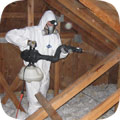
| Attic restoration is the term often used in the nuisance wildlife control industry to describe the process of restoring an attic to its original state after it has been inhabited and soiled by wildlife. So for example, in this case, a family of squirrels lived in this attic for years, and created a big mess within, by bringing in a great deal of nesting material, and also leaving behind a lot of waste - both droppings and urine, which I could easily smell. The problem with the nesting material is that it creates a potential fire hazard. It's all flammable plant material, and of course it's ...click for more |
02.04.2004 - Urban Pigeon Removal at Water Park
 |
|
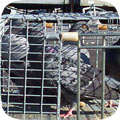
| This is an example of an urban pigeon removal job that I performed at a water park here in Orlando FL. You can see the water slides in the
background of this photo. The water park, Wet-N-Wild, was concerned about the presence of pigeons in the park. They were a constant nuisance - not only flocking
around the park and eating scraps left by park visitors, but most of all, nesting on the buildings and leaving behind nesting debris, feathers, and of course,
the big problem - pigeon droppings. The droppings were unsightly and unsanitary. Pigeon poop is primary...click for more |
01.19.2004 - Alligator Removal in Orlando Florida
 |
|
| As a wildlife removal specialist working in the state of Florida, I hear the same initial reaction from northerners again and again. When I tell that what I do for a living, the first thing out of their mouth
is, "Wow, so you mean, you trap gators and (stuff)?" Gators, gators, gators, that's all anyone cares about, is gators. No doubt the sensationalist stylings of Steve Irwin the Crocodile hunter, and other such critter mavericks
on TV have taught people to think that every fellow who dons a khaki shirt and goes after wild animals is wrestling six gators before lunch. The ...click for more |
01.13.2004 - Animal In the Wall - Opossum
 |
|
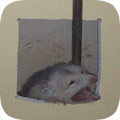
| This was a very interesting job. I arrived at a home to inspect for animals in the attic. The guys living in the house said that they heard all kinds of
walking and scratching in the attic. The first thing I did was an external inspection of the house and
roof. I couldn't find any area that animals could use to get inside. Yet when I entered the attic, I saw lot of tracks and tunnels and opossum droppings. I was doing my attic inspection, when I thought I heard a noise coming from down one of the walls. I was able to peek
down the wall from the attic, and there was the culprit ...click for more |
01.04.2004 - Removing a Squirrel from a Chimney Flu
 |
|
| This customer was hearing squirrels in his chimney. The problem was that he had a slick metal flu, a tube as you can see in the photo behind my left arm.
Some squirrels had made a nest up at the top of the flu, under the rain and debris guard (not pictured, since I've removed it). This wouldn't really be a problem, but a
female squirrel made a nest, and one of her young squirrels, once it got the knack for running about and exploring, decided to explore its way down the chimney flu, where it
got stuck. Once down there, it made a hell of a racket, desperately tryin ...click for more |
12.31.2003 - Bobcat Trapping
 |
|
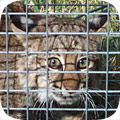
| I set armadillo traps at a house in a suburban community on the east side of Orlando. I had trapped an armadillo already, but the customer wanted me to continue trapping, in case there were more. The yard suffered from significant
armadillo digging. I got a call on the morning of the 31st, from the owner of the house, and she told me that one of the cages contained a large and aggressive cat. "I think it's a bobcat", she said. "Suuurree… it's a bobcat", I thought. The customer
is always telling me about wild and crazy animals that do not exist. Every harmless little Corn Snake ...click for more |
12.29.2003 - Rodent Trapping in a Cage
 |
|
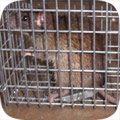
| Wow! Here's a first! A Roof Rat and and Eastern Gray Squirrel in one cage! I was called out to a home that had scratching in the ceiling. Most of the noises were heard in the morning and evening, so I suspected that it was squirrel
activity. I inspected the home, and found multiple entry points at the eave gaps and in holes chewed in the soffit. I sealed up the entire home and installed heavy-duty steel screen on the soffit areas, so that no more squirrels could get in. I left
the two primary entry holes open, so that I would not seal any animals inside (where they'd desperately ...click for more |
11.01.2003 - How to Remove a Dead Animal in the Attic
 |
|
| I get a lot of phone calls for the removal of dead animals inside houses. Such an even causes a very strong odor inside the house. Sometimes the
smell is so bad that the inhabitants cannot bear to live in the house any longer. If the person in the house realizes that the source of the stench is from a dead
animal that is decaying, they can call me, and I'll come and remove the rotting critter. The animal could have died in a variety of places - under the house, in
the wall, or so on, but oftentimes the dead body is up in the attic. If I determine, based on my analysis of the house arc...click for more |
09.14.2003 - Catch Squirrels on the Roof
 |
|
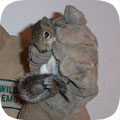
| Here are two juvenile Eastern Gray Squirrels that I caught off of a roof. I do most of my squirrel trapping on roofs. Squirrels are very common pest
critters in urban and suburban areas, and they spend a lot of time of the roofs of homes. This is party because the roof is just another part of their environment, but
squirrels also often nest in various areas of the roof. If the roof provides some shelter in an area, such as an overhanging eave, chimney cover, awning, or other
structure, squirrels may end up nesting in those areas. I removed these juvenile squirrels who were in ...click for more |
09.04.2003 - Big Bat Removal Project
 |
|
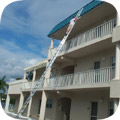
| This is my largest bat removal project so far - a large resort on Siesta Key, Sarasota. They had large colonies of bats living in these mansard style roofs. I, along with several other bat control companies
throughout Florida, came to the property to give quotes for the project. The project presented many challenges. First of all, the bats were entering and exiting the mansard roofs through barrel tile. These tiles make a
job much more difficult, because the entire surface of the roof, not just the roof lines, must be addressed. Barrel tiles leave gaps at every section where tile ...click for more |
08.29.2003 - Wildlife Trapping
 |
|
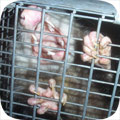
| "LET ME OUT!" bellowed the trapped opossum. "No!" I said. "YES!!!" hollered the critter. "Not until you're relocated to a state-approved wildlife preserve at least ten miles from your capture site!" I shouted. "OKAY!" said the opossum, "BUT COULD
YOU AT LEAST GIVE ME A CIGARETTE WHILE I'M IN HERE?" True story. I am a nuisance wildlife trapper by trade. I do not trap wild animals for the fur or the hides or the
meat or for fun. I am a professional wildlife control expert who solves problems between people and wild animals. This means that I do prevention, ...click for more |
07.03.2003 - Wildlife Trapping in Orlando Florida
 |
|
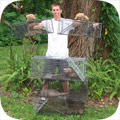
| If you need wildlife trapping in Orlando Florida, I'm your guy! I'm the rootinest-tootinest critter gitter in all of Florida, yee-haw! I've caught raccoons and squirrels, both boys and girls, from coast to coast, with taters and toast! I catch
them mangy musky muskrats, those skiving squirrels, and those tasty armadillos by the bucketload. I'm armed with a steel trap and an itchy snare pole finger, and I can smell a dead skunk from your mother in law with but one whiff of my bloodhound snout. It's late and I'm
tired and I'm just writing gibberish, because I want to go ...click for more |
05.03.2003 - Dead Raccoon In House Air Handler
 |
|
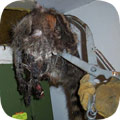
| This house was the worst-smelling house that I've ever been in. The odor was unbelievably wretched, both in stench and power. The house was completely unlivable. I knew, as did the owner, that a dead animal lay somewhere in the house, rotting. The smell had afflicted the house for ten days. I put on my HEPA filter mask and searched all around. I searched the attic extensively, but I couldn't find the source of the odor. Amazingly, I did find some living baby raccoons. I suspected that the mother raccoon must have died somewhere, but I could not find it. I ev...click for more |
04.25.2003 - Raccoon Capture - Catching Raccoons
 |
|
| Baby raccoons are cute. Attics are hot. That's what I figured out during this job. A husband and wife called me with suspicion of raccoons in
the attic. When I asked why they suspected they had raccoons living in the attic, they said, "Well, we've heard some scratching and clawing up there at nighttime, and we
hear a sort of chattering that seems like it's raccoon sound, there's a scent that we think is raccoon poop, and every night we watch a fat raccoon climb the downspout and into
a vent hole leading into the attic". The evidence sounded good enough to me, so I head ...click for more |
04.07.2003 - Raccoon Extermination
 |
|
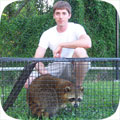
| This is the largest raccoon that I've caught so far. The customer told me that he had a very large raccoon that was continually ripping into his
screened-in pool area, and that he needed a raccoon exterminator right away. I told him that I could help him, but that I don't really exterminate raccoons. I told
him that I trap them in live cage traps and relocate them far outside the city limits, so that it will never be able to come back again. "That's okay with me, just get
rid of it!" he said, "But I think you're going to need an awful big cage, this sucker is huge!". I have a special very ...click for more |
Here is the complete list of all 351 blog entries!
11.09.2008 - How to Tell if Snake is Venomous / Poisonous
10.03.2008 - Mother Raccoon with Babies
09.18.2008 - Red Touch Yellow, Kills a Fellow. Red Touch Black, Friend of Jack
09.09.2008 - Big Brown Bat Photograph
08.14.2008 - Mole Extermination
07.27.2007 - Raccoon Hunting
07.15.2008 - Male Bat Roosting in Tree
07.14.2008 - Eastern Diamondback Rattlesnake
07.02.2008 - Cute Baby Wildlife
06.19.2008 - Raccoons In Garbage Can
06.03.2008 - Raccoon Holes Leading Into Attic
05.15.2008 - How to Prevent Rodent Damage in an Attic
04.20.2008 - Pigeons in the Attic - Get Them Out
04.14.2008 - Types of Florida Water Snakes
04.14.2008 - Playing Possum
04.11.2008 - Dead Animal Carcass Removal Under House
04.08.2008 - Raccoons Tearing Up Sod
03.29.2008 - Mole Poison
03.15.2008 - Mouse in Attic - Trapping & Removal
03.13.2008 - Flying Bat Photograph
02.10.2008 - Can Snakes Climb? Snake Crawls up a Wall
02.08.2008 - Squirrel Nest in Attic
02.02.2008 - Ladder Work on Apartments
01.25.2008 - Raccoons in House - Get them Out
01.25.2008 - Pigeon Trap to Get Pigeons Out of a House
01.05.2008 - Norway Rat Control & Trapping
12.15.2007 - Raccoon Under House
12.08.2007 - Florida Water Snake
11.11.2007 - Raccoon Drawing
11.02.2007 - Rat Poison Is a Bad Idea
11.01.2007 - Bird Spikes for Pigeon Repellent
10.23.2007 - Bat Extermination
10.22.2007 - Eastern Coral Snake
09.26.2007 - Raccoon in the Soffit or Eave
09.22.2007 - Giant Rat - Big Norway Rat in Seattle
09.19.2007 - Pigeon Poop - Droppings & Waste in Attic
09.12.2007 - Dead Mouse in the House / Ceiling
09.09.2007 - Squirrel Detail Closeup Photograph
09.04.2007 - Opossum Teeth - Threat Display
08.15.2007 - Bat Poop - Droppings & Waste in an Attic
08.14.2007 - How Do I Get the Bats Out?
08.08.2007 - Pygmy Rattlesnake
07.01.2007 - Squirrel Cage - Trapped in a Cage Trap
06.27.2007 - Eating Rats for Dinner
06.21.2007 - Baby Cottonmouth Photo / Picture
05.30.2007 - Eastern Glass Lizard / Snake
05.23.2007 - Oppossum Capture
05.18.2007 - Baby Armadillo Photograph
05.15.2007 - Flying Squirrel Removal
05.08.2007 - Vulture Removal & Control
05.06.2007 - Raccoon Removal Company - Wildlife Control
05.03.2007 - Dead Rat In the Attic - Remove Dead Rodent in Attic
04.14.2007 - Raccoon Tracks / Footprints
04.13.2007 - Red Rat Snake
04.04.2007 - Bats Out in the Daytime?
03.24.2007 - Cutting a Dead Squirrel Out of the Wall
03.23.2007 - Animal Hydration - Thirsty Armadillo
03.17.2007 - Fight! Raccoon versus Opossum
03.16.2007 - Pigeon Disease - Diseases from Birds
03.11.2007 - Raccoon Snare - Snaring an Animal
03.05.2007 - America's Deadliest Snake
03.04.2007 - Rodents Chew on Electrical Wires in the Attic
02.27.2007 - Raccoon Face Photograph
02.22.2007 - Do Bats Carry Rabies?
02.20.2007 - Squirell Control & Removal
02.06.2007 - Armadillo Cage - Pet Armadillo?
02.02.2007 - Animal Trapping
01.26.2007 - Pigeon Droppings & Waste in an Attic
01.21.2007 - Ringneck Snake Photograph
01.19.2007 - Roof Rat Photo
01.14.2007 - Bat Control in Orlando, FL
01.13.2007 - Fat Raccoon
12.25.2006 - Christmas Squirrel - Ben Saves the Day
12.19.2006 - Squirrel Questions and Answers
12.18.2006 - How to Trap a Rat in a Cage
12.11.2006 - Soffit Repair To Keep Critters Out of Attic
12.06.2006 - Florida Brown Snake
11.30.2006 - Guinea Hen Capture
11.28.2006 - Green Anole
11.25.2006 - Dead Animal Under the Floorboards
11.19.2006 - Trapper Apprentice - Learning How To Trap Wildlife
11.12.2006 - Mummified Bat
11.04.2006 - How Do You Trap An Armadillo?
11.03.2006 - Raccoon Trouble Emails
11.02.2006 - Removal of a Hawk From Aeropostale Store
10.25.2006 - Wildlife Relocation
10.22.2006 - Florida Scarlet Snake
10.11.2006 - Wildlife Rescue in Orlando Florida
10.10.2006 - Florida Exotic Species - Iguana, Burmese Python
10.05.2006 - A Nest of Baby Rats
10.03.2006 - Preventing Squirrels from Getting in the Attic
10.01.2006 - Brown Water Snake
09.27.2006 - Florida Armadillo Control
09.25.2006 - How To Catch Squirrels
09.24.2006 - Ugly Opossum
09.22.2006 - Wildlife Jobs in Florida
09.21.2006 - Rat Catching - How to Catch a Rat
09.20.2006 - Florida Ringneck Snake
09.18.2006 - Coonskin Cap
09.11.2006 - Baby Coral Snake
09.09.2006 - Critter Catcher in Training
09.07.2006 - Pine Woods Snake
09.05.2006 - How To Remove Cats in the Attic
09.03.2006 - Florida Pigeon Control
08.24.2006 - Orlando Rattlesnake
08.20.2006 - Groundhog Trapping
08.16.2006 - A Giant Colony of Bats in the Attic
08.12.2006 - Removal of a Dead Opossum in the Wall
08.01.2006 - How To Get an Animal Out of a Tree
07.27.2006 - Cuban Tree Frog in Florida
07.26.2006 - Snake Eating Squirrel
07.25.2006 - Burmese Python in Florida
07.18.2006 - Attic Cleanup - Remove Wildlife Waste & Poop
07.12.2006 - Chicago Raccoon Job Emails
07.11.2007 - Tokay Gecko In Florida
06.29.2006 - Chimney Swift Removal
06.27.2006 - Mouse Nest In Attic
06.21.2006 - Attic Insulation Replacement Vacuum Cleanout
06.17.2006 - Nine Banded Florida Armadillo
06.15.2006 - Dead Baby Oppossums In Wall
05.30.2006 - Eastern Garter Snake - Not Garden Snake
05.22.2006 - Baby Bat - Evening Bat
05.21.2006 - Evening Bat Closeup
05.18.2006 - Pueblan Milk Snake
05.10.2006 - Raccoon Bait - What Foods Catch Raccoons?
05.02.2006 - Tile Roof Repair - Roof Rat Prevention
04.29.2006 - Florida Black Racer
04.26.2006 - Raccoons in the Porch Stealing Pet Food
04.24.2006 - Corn Snake
04.21.2006 - Horrible Smell Inside of a Building - How to Get Rid of Bad Odor
04.20.2006 - Snake Removal at Carrot Top’s House
04.16.2006 - Female Opossum With Babies on Her Back
04.05.2006 - Removal of a Critter in the Attic
04.04.2006 - Bat Droppings & Histoplasmosis
04.03.2006 - Toad Mating
04.02.2006 - Little Raccoon
04.01.2006 - Dead Florida Wild Hog in Orlando
03.31.2006 - Bat Guano Cleanup in Attic
03.27.2006 - Baby Possum
03.26.2006 - Snake in the House - How to Get it Out
03.26.2006 - Squirrel Traps in Action
03.18.2006 - Pigeon Contamination from Bird Infestation
03.17.2006 - Do Armadillos Carry Leprosy?
03.13.2006 - Fat Rat
03.12.2006 - Rat Poop Droppings & Waste in Attic
03.11.2006 - Critter Trapper Education
03.10.2006 - Dead Animal Under a House
03.10.2006 - Raccoon Active During the Day - Rabies?
03.03.2006 - Squirrels in a Vent Pipe
03.01.2006 - Snake Caught on a Glue Trap
02.25.2006 - How to Catch an Armadillo by Hand
02.18.2006 - City Raccoon - Urban Raccoon Control
02.11.2006 - Rodents in the Attic
02.06.2006 - Wild for Notre Dame! Irish Raccoons
02.03.2006 - Bat Removal in St. Petersburg
01.26.2006 - Project at SeaWorld Orlando
01.21.2006 - Photo of Bats in Flight
01.20.2006 - Pigeon Control at Orlando Car Dealership
01.18.2006 - Raccoon Questions and Answers
01.13.2006 - Poisonous Snakes Of Florida
01.12.2006 - Squirrel Relocation
01.10.2006 - Mouse Vs. Rat - How to Tell The Difference
01.03.2006 - Emergency Rat Shooting
01.02.2006 - A Dead Opossum in the Ceiling
12.27.2005 - Pigeon Spike Installation
12.21.2006 - Fix Holes in Roof to Keep Out Animals
12.16.2005 - Possum in a cage in an attic
12.09.2005 - Dead Rodent in a Wall
12.02.2005 - How To Find a Rat
11.18.2005 - Snake in the Pool - How To Remove
11.17.2005 - Bat Exclusion Project
11.16.2005 - Mouse in House - Get it Out
11.15.2005 - Do Rats Chew on Electrical Wires in the Attic?
11.05.2005 - Dead Rat Removal Due to Poison
10.31.2005 - Florida Iguana Removal
10.25.2005 - Roadkilled Armadillo
10.22.2005 - Orlando Florida Coral Snake
10.10.2005 - Duck Removal & Control
10.09.2005 - Florida Diamondback Rattlesnake
10.07.2005 - Animal In the House - Get it Out!
10.05.2005 - Bait Box To Trap Rat
10.03.2005 - Dead Squirrel in Ceiling
10.02.2005 - Wildlife Career - Removing Problem Animals
10.01.2005 - Raccoon Trapping Tips
09.22.2005 - Fastest Snake in America
09.20.2005 - Baby Squirrel with Peanut
09.15.2005 - Racoons in Attic
09.01.2005 - How to Solve an Armadillo Problem
09.01.2005 - Crab Removal
08.25.2005 - Snake Hook
08.18.2005 - Bats in the House
08.13.2005 - Dead Critter Under the Bathtub
08.01.2005 - Animal on the Roof - Opossum
07.28.2005 - How to Kill Rats in the Attic
07.23.2005 - Photograph of Striking Snake
07.18.2005 - Barrel Tile Roof - Allows Rodents In Attic
07.15.2005 - Wounded Armadillo
07.09.2005 - Florida Softshell Turtle
07.09.2005 - Mexican Free Tailed Bat
07.02.2005 - Florida Lizards
06.30.2005 - Mess Under House
06.21.2005 - Yellow Rat Snake
06.20.2005 - Do Plastic Owls Keep Away Pigeons?
06.18.2005 - How to Solve Raccoon Problems
06.16.2005 - Attic Decontamination - Clean and Deodorize the Attic
06.12.2005 - Dead Rat on Glueboard - Do Glue Boards Catch Rodents?
06.06.2005 - Dead Squirrel in the Attic
05.25.2005 - Extraction of a Snake from an Attic
05.20.2005 - Does Bat Repellent Work?
05.18.2005 - Armadillo Trapper in Orlando FL
05.15.2005 - Possum Mother with Babies
05.12.2005 - Dead Catfish Under a House
05.08.2005 - Raccoons in Chimney - Get them Out
05.07.2005 - Florida Redbelly Turtle
04.30.2005 - Infant Rats - Roof Rat Babies
04.21.2005 - Mystery Animal In a Tree
04.18.2005 - A Bat Flying in the Attic
04.12.2005 - Squirrel Hole Fix
04.09.2005 - Water Moccasin
04.04.2005 - Fox Removal
04.03.2005 - Dead Bear? No! Dead Cow!
03.27.2005 - Rat Extermination
03.16.2005 - How To Kill Raccoons
03.14.2005 - Pigeon Trapping in Cage Traps
03.12.2005 - Raccoon Poop - Droppings & Waste in an Attic
03.08.2005 - How To Stop Squirrels from Chewing
03.03.2005 - Bat Control Project
03.03.2005 - Closeup Photograph of an Armadillo
02.20.2005 - Common Snakes of Orange County, Florida
02.18.2005 - Sandhill Crane Removal
02.13.2005 - Tug-O-War With a Possum in the Attic
02.11.2005 - Rat in the Toilet - Removal
01.29.2005 - Infant Squirrels
01.24.2005 - Raccoon Nest in Attic
01.08.2005 - Animal Poop in the Attic - Diseases from Wildlife Waste
12.23.2004 - Snake Catcher - How to Catch a Snake
12.22.2004 - Rodent Extermination
12.07.2004 - Raccoons on the Roof
12.06.2004 - Eastern Coachwhip Snake
11.24.2004 - Dead Pigeons in Ceiling
11.19.2004 - Squirrel Poop - Droppings & Waste in an Attic
11.18.2004 - Do Mothballs Repel Armadillos?
11.17.2004 - Frog Removal, Control, Get Rid of Frogs
11.09.2004 - Roof Rat - Control, Removal, Trapping
10.31.2004 - Flying Bat Photo
10.25.2004 - Raccoons in the Ceiling
10.24.2004 - Possum Photograph
10.22.2004 - How to Find a Lost Snake in the House
10.22.2004 - Trapping Wild Animals of Orlando Florida
10.18.2004 - Iguana Control in Orlando Florida
10.14.2004 - One Way Door To Remove Squirrels
10.14.2004 - Dead Possum Under Trailer Home
10.12.2004 - Rodent Trapping Techniques
10.07.2004 - Possum in a car engine
10.06.2004 - Baby Black Racer Snake
10.02.2004 - How To Trap a Bat
09.22.2004 - Florida Cottonmouth Snake
09.21.2004 - Dead Dog Under a House - How to Kill a PitBull
09.20.2004 - Armadillo Hunting in Florida
09.18.2004 - Florida Gopher Tortoise
09.15.2004 - Albino Rat Caught on a Snap Trap
08.23.2004 - Pet Raccoon
08.21.2004 - Florida Bat Removal Project
08.16.2004 - Squirrels in the Soffit
08.12.2004 - Legless Lizard
08.03.2004 - Kittens in the Attic - How To Get Them Out
07.28.2004 - How to Get Rid of Mice in the Attic
07.12.2004 - Do Snakes Chase and Eat Other Snakes?
06.20.2004 - Vent Repair to Keep Squirrels Out
06.09.2004 - Armadillo Capture by Hand
06.08.2004 - Raccoon Damage - Wall Torn out At Apartment
06.06.2004 - Eastern Mole Control
05.25.2004 - Animal in the Wall
05.22.2004 - Removal of a Peacock from a Roof
05.21.2004 - Rodent Removal
05.07.2004 - Wildlife Management In Orlando Florida
04.27.2004 - What Bait to Use to Trap Armadillos
04.15.2004 - Solve This Bat Problem
04.14.2004 - Attic Restoration - Fix and Clean the Attic
04.13.2004 - Dead Opossum Under Mobile Home
04.11.2004 - Banded Water Snake
04.05.2004 - Pet Squirrels in my Pockets
04.01.2004 - Raccoon Eyes - Tapetum Lucidum Effect
03.29.2004 - Rat in the Ceiling
03.28.2004 - Snake Shedding - About to Shed
03.24.2004 - Dead Animal Under House - Bad Smell Removal
03.20.2004 - Orlando Florida Snake Charmer
03.10.2004 - Skunk Control
03.04.2004 - How To Stop Armadillo Digging
02.22.2004 - Bats in a Barrel Tile Roof
02.21.2004 - Squirrel Infestation
02.20.2004 - Snake Powder Spray to Keep Away Snakes
02.19.2004 - Professional Pigeon Project in Orlando
02.18.2004 - Dead Mouse in Attic - Rotting Mice
02.09.2004 - Mole Trapping
02.04.2004 - Urban Pigeon Removal at Water Park
02.03.2004 - Remove Raccoons in the Wall
01.29.2004 - Pigeon Exclusion - Get Pigeons Out of Building
01.25.2004 - Does Bat Trapping Work?
01.19.2004 - Alligator Removal in Orlando Florida
01.13.2004 - Animal In the Wall - Opossum
01.06.2004 - Orlando Wildlife Rehabilitation
01.05.2004 - Squirrel on a Rope
01.04.2004 - Removing a Squirrel from a Chimney Flu
01.02.2004 - Snake Tongs - Snake Catching Tool
12.31.2003 - Bobcat Trapping
12.29.2003 - Rodent Trapping in a Cage
12.14.2003 - Animals Gnaw on Electrical Wires
12.05.2003 - Rat Poop Droppings & Waste in Attic
12.01.2003 - Stray Cat Trapping
11.21.2003 - Eastern Gray Squirrel
11.20.2003 - Pigeon Control BB Gun Shooting
11.12.2003 - Animal on the Roof - Trap and Remove
11.08.2003 - Florida Boa Constrictor
11.01.2003 - How to Remove a Dead Animal in the Attic
10.29.2003 - Mouse Caught in a Cage
10.25.2003 - Bat Removal In Miami
10.24.2003 - How To Vacuum the Attic to Get Rid of Animal Waste
10.21.2003 - How to spell "Snake"
10.17.2003 - Animals Under the House - Keep them Out
10.11.2003 - Raccoon Repellent
10.06.2003 - Wild Animal Trapping in Orlando Florida
10.04.2003 - Baby Corn Snake Photograph
09.30.2003 - Possum Trapping
09.17.2003 - Snake Emergency Snakebite
09.14.2003 - Catch Squirrels on the Roof
09.13.2003 - Dead Rat in House - Died Chewing on Electrical Wires
09.04.2003 - Big Bat Removal Project
08.29.2003 - Wildlife Trapping
08.23.2003 - Boa Constrictor caught in Orlando
08.20.2003 - Opossum Poop - Droppings & Waste in Attic
08.11.2003 - Squirrels in the Eaves
08.08.2003 - Owl Removal - Stuck in Pool Area
08.05.2003 - Raccoon Poison
07.15.2003 - Armadillo Pest Control
07.11.2003 - Snake Sack - Bag for Snakes
07.08.2003 - Dead Raccoon Carcass Removal
07.03.2003 - Wildlife Trapping in Orlando Florida
06.27.2003 - Armadillos Invade Florida
06.22.2003 - Five Lined Skink
06.16.2003 - Dumb Possum - How Smart Are Opossums?
05.23.2003 - Armadillo Removal Tactics
05.11.2003 - Fix Hole to Keep Rats Out of House
05.03.2003 - Dead Raccoon In House Air Handler
05.01.2003 - Rat or Mouse in Ceiling - Trapping & Removal
04.29.2003 - Bats in a Barrel Tile Roof
04.27.2003 - Cute Baby Opossum in House
04.25.2003 - Raccoon Capture - Catching Raccoons
04.22.2003 - Mole Capture & Removal
04.07.2003 - Raccoon Extermination
|



