-
info@aaanimalcontrol.com
Call us for help in your town
Humane Wildlife Education
Rat Control and Removal
Need rat removal in your hometown? We service over 500 USA locations! Click here to hire us in your town and check prices - updated for year 2020.
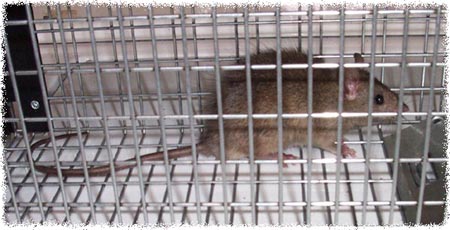 AAAnimal Control does not use poison. Poison poses a threat to your household, the environment, and worst of all,
it leaves dead rats and mice in the walls. I use integrated pest management, which means that I trap existing animals, seal up
areas where rats and mice enter, use one-way doors if possible, modify habitat so that your home is less appealing to them. I believe
that this is the best approach. I see pest control companies and other exterminators charging an arm and a leg to spread some
poison outside the home. That is absolutely ridiculous and lazy, and doesn't solve anything.
AAAnimal Control does not use poison. Poison poses a threat to your household, the environment, and worst of all,
it leaves dead rats and mice in the walls. I use integrated pest management, which means that I trap existing animals, seal up
areas where rats and mice enter, use one-way doors if possible, modify habitat so that your home is less appealing to them. I believe
that this is the best approach. I see pest control companies and other exterminators charging an arm and a leg to spread some
poison outside the home. That is absolutely ridiculous and lazy, and doesn't solve anything.
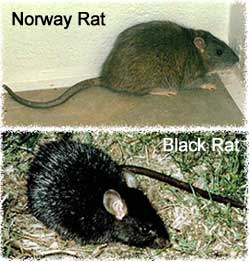 Rat info: The most common nuisance rats are the Norway Rat, also known as the
Brown Rat, and the Roof Rat, also known as the Black Rat, Ship Rat, or here in Florida, the Fruit Rat or Citrus Rat.
Though the rats in this photo look brown and black, most of them are just gray. Rats are commonly associated with urban
areas. They will go wherever they can find food and shelter, and that often includes buildings. Although
they may look large, they need only a tiny hole (the size of a quarter) or a 1/2 inch crack to fit through.
Roof Rats and Norway rats will consume many different types of plant and animal foods such as insects, meat refuse,
bird eggs, seed that has been spilled from bird feeders, pet food that has been left outdoors, and almost any food in your house.
They also contaminate food with their urine and feces. Rats contaminate huge percentages of agricultural produce
and food in the home or business. Rats are enormous carriers of many different diseases, and it has been reported that rats bite more than
fifteen thousand people per year including the very young, old or incapacitated. Rats are primarily nocturnal.
Even though they often live for less than a year, they can breed in large quantities and populations can get out of hand. For more information, visit www.OrlandoRats.com
Rat info: The most common nuisance rats are the Norway Rat, also known as the
Brown Rat, and the Roof Rat, also known as the Black Rat, Ship Rat, or here in Florida, the Fruit Rat or Citrus Rat.
Though the rats in this photo look brown and black, most of them are just gray. Rats are commonly associated with urban
areas. They will go wherever they can find food and shelter, and that often includes buildings. Although
they may look large, they need only a tiny hole (the size of a quarter) or a 1/2 inch crack to fit through.
Roof Rats and Norway rats will consume many different types of plant and animal foods such as insects, meat refuse,
bird eggs, seed that has been spilled from bird feeders, pet food that has been left outdoors, and almost any food in your house.
They also contaminate food with their urine and feces. Rats contaminate huge percentages of agricultural produce
and food in the home or business. Rats are enormous carriers of many different diseases, and it has been reported that rats bite more than
fifteen thousand people per year including the very young, old or incapacitated. Rats are primarily nocturnal.
Even though they often live for less than a year, they can breed in large quantities and populations can get out of hand. For more information, visit www.OrlandoRats.com
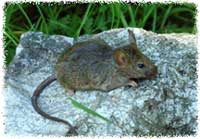 Mouse info: The house mouse weighs less than an ounce. It can fit in a crack
of only a quarter inch. They can and do get everywhere. If your house has food and has any small openings,
eventually mice will find their way in. House mice eat many types of food but prefer seeds and grain. They
do not hesitate to sample new foods, sampling many kinds of items in their
environment. Foods high in fat, protein, or sugar may be preferred even when grain and seed also are present.
A single mouse can't eat a whole lot, but because of their habit of nibbling on many foods, discarding
partially eaten items, and defecating everywhere, mice destroy considerably more food than they consume. Mice
are primarily nocturnal, they can dig, they chew like all rodents do, and they can produce a tremendous
number of offspring.
Mouse info: The house mouse weighs less than an ounce. It can fit in a crack
of only a quarter inch. They can and do get everywhere. If your house has food and has any small openings,
eventually mice will find their way in. House mice eat many types of food but prefer seeds and grain. They
do not hesitate to sample new foods, sampling many kinds of items in their
environment. Foods high in fat, protein, or sugar may be preferred even when grain and seed also are present.
A single mouse can't eat a whole lot, but because of their habit of nibbling on many foods, discarding
partially eaten items, and defecating everywhere, mice destroy considerably more food than they consume. Mice
are primarily nocturnal, they can dig, they chew like all rodents do, and they can produce a tremendous
number of offspring.
 Click here for my rat photo gallery.
Dozens of photos of my rat removal work.
 Click for examples of rat trapping jobs I've done.
Get ideas from my rat removal projects.
Nuisance concerns: They chew on wires and anything else they can get their teeth on.
They eat your food and contaminate it. They leave droppings in the attic and everywhere.
They spread filth and pestilence. They once killed a third of Europe's people ...that's the equivalent of at least a dozen Americans.
Some examples of rat diseases that can be spread by rodents are Salmonellosis (acute food poisoning), Rickettsia Pox,
Hantavirus (via droppings), tapeworm, infectious jaundice, and tularemia. I highly recommend
attic decontamination services if you've had rats living in your attic. Check out my Orlando rodent control page for more information on our permanent rat control techniques. We also deal with
mouse problems, which you can read about on my Orlando mouse control and mice trapping page, but the truth is that mice are far less common than rats in central Florida.
AAAnimal Control will combat that rat and put mice on ice!
 Click here for rat job prices.
Note: These are my old personal prices, not applicable nationwide.
 Click here for photos of rats trapped on power lines in the attic.
Click here for photos of rats chewing on power lines and pipes.
 Click here for photos of rat droppings in attics.
 Click here for information on rat diseases.
AAAnimal Control specializes in rat removal. Although we deal with all kinds of wildlife, rats are often the most challenging animal that we deal with, due to their amazing climbing capacity and ability to squeeze through small openings. We are not like the other Orlando exterminators or exterminating companies. They want to sign you to a monthly contract - they don't want to permanently solve your problem. The only way to keep the rats out of your home and attic for good is by finding and sealing (with steel) all of the entry points that rats use. This requires a lot of experience and rat study. The rats that we deal with 100% of the time here in Orlando are actually the Roof Rats. They like the sub-tropical environment, as opposed to the Norway Rats, which are more abundant up north. Roof Rats are amazing climbers, and they love to lie in attics. Inspecting your home, finding all of the holes the rats use, sealing those holes up, and trapping and removing ALL of the rats, without leaving any dead odor-causing bodies behind, is what we specialize in. Please visit our dedicate Orlando Rat Control website, www.OrlandoRats.com for more information. If you need help in the Tampa Bay area, click here for Tampa rat control.

Select Your Animal

Raccoons Raccoon Removal Advice & Information

Squirrels Squirrel Removal Advice & Information

Opossum Opossum Removal Advice & Information

Skunks Skunk Removal Advice & Information

Rats Rat Removal Advice & Information

Mice Mouse Removal Advice & Information

Moles Mole Removal Advice & Information

Groundhog Groundhog Removal Advice & Information

Armadillos Armadillo Removal Advice & Information

Beaver Beaver Removal Advice & Information

Fox Fox Removal Advice & Information

Coyotes Coyote Removal Advice & Information

Birds Bird Removal Advice & Information

Bats Bat Removal Advice & Information

Snakes Snake Removal Advice & Information

Dead Dead Animal Removal Advice & Information

OthersOther Wildlife Species Advice & Information